Guangzhou, Guangdong , China.

+86 13539860818

Nano microporous insulation boards for high-temperature industrial applications

Nano Microporous Insulation Board Manufacturer

About Us
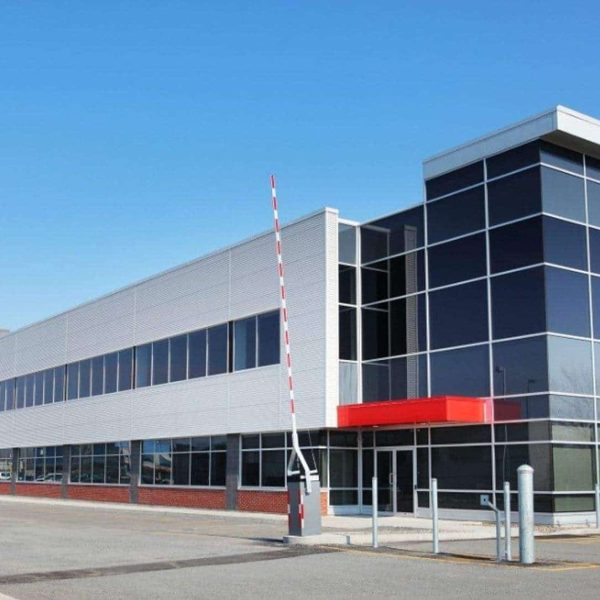
Guangzhou Anchor Technology factory building and manufacturing facilities

Guangzhou Anchor Technology Co., Ltd., specializing in nano-microporous insulation boards for over a decade, boasts a 50,000 sq. meter factory and 200+ staff. Equipped with robust quality control tools, we ensure stringent checks on materials and products. Our advanced R&D lab continually enhances product performance, meeting market demands. Our nano-microporous boards are a world-leading insulator, enduring temperatures up to 1150°C while requiring a fraction of traditional thickness for equivalent insulation.

Our engineers hold a decade’s experience applying our products in industries spanning cold chain transport, battery safety, petrochemicals, steel, ceramics, kiln furnaces, and new energy vehicles.

Leveraging expertise, we offer tailored solutions like aluminum foil, fiberglass cloth, PE shrink film lamination, custom shapes, and holistic insulation designs. Complimentary consultations enhance customer experience.

Our Service

Customized

Provide customized products according to your requirements

Design

Our engineers provide a complete set of professional designs

Consulting

We provide professional consultation on insulation materials
Our Products
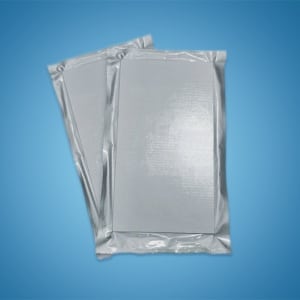
Vacuum insulation panel with nano microporous core
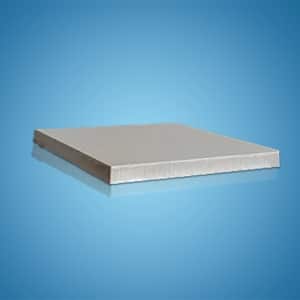
Vacuum Insulation Panel (VIP)

Vacuum Insulation Panel (VIP)

Vacuum Insulation Panel (VIP) is a highly efficient insulation material that combines microporous technology and vacuum technology by vacuum encapsulating the microporous insulation core material mainly made of fumed silica into a high resistance diaphragm bag. The material has a very low thermal conductivity (typical value: 0.004 W/m K), good cold insulation effect, long service life, and usually can reach over 50 years. The board surface and board edge are flat, which can reduce the heat leakage at the edge as much as possible. It is easy to install and transport, and has excellent anti-aging function. Even when the vacuum is lost, this material still has excellent thermal insulation performance, and has a very low expansion rate. The gas-phase silica core board uses environmentally friendly materials, which can be recycled and reused, ensuring safety and environmental protection.

Standard nano microporous insulation board
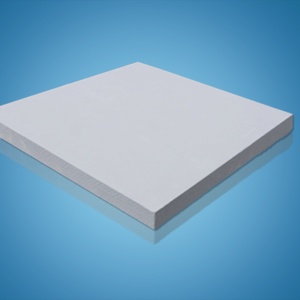
Standard Nano Microporous Insulation Board
Nano microporous insulation board with PE film surface
PE-Faced Nano Microporous Insulation Board
Nano microporous insulation board laminated with aluminum foil
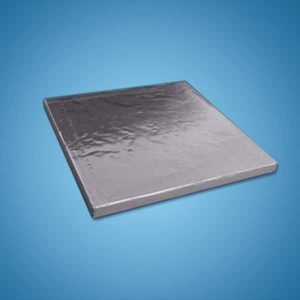
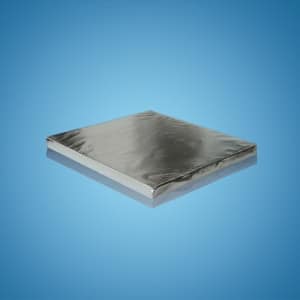
Aluminum Foil-Faced Nano Microporous Insulation Board
Nano microporous insulation board with glass fiber fabric surface
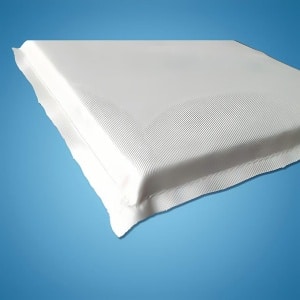
Glass Fiber Fabric-Faced Nano Microporous Insulation Board
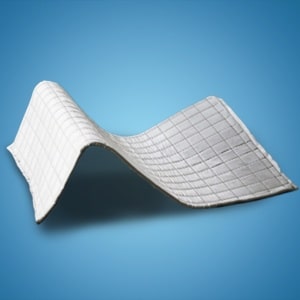
Flexible nano microporous insulation sheet
Flexible Nano Microporous Insulation Sheet
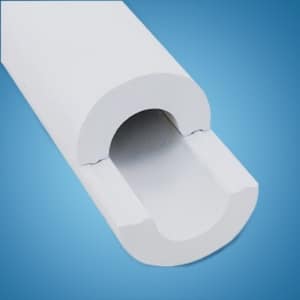
Arc-shaped nano microporous insulation board
Arc-Shaped Nano Microporous Insulation
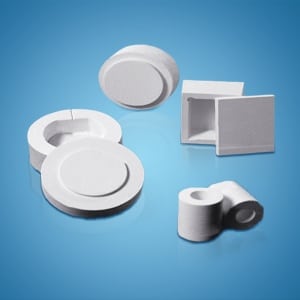
Custom-shaped nano microporous insulation parts
Custom-Shaped Nano Microporous Insulation
Nano microporous insulation board for steel ladles
Nano Microporous Insulation for Steel Ladles
Nano microporous insulation powder
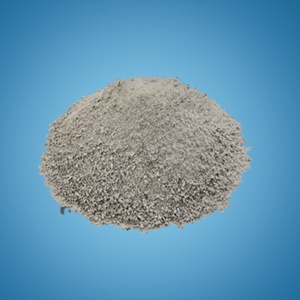
Nano Microporous Insulation Powder

Why engineering buyers trust Home

Anchor-tech track record

Anchor-tech has been pressing fumed-silica microporous insulation boards at our Guangzhou facility since 2014. The production floor runs three pressing lines dedicated to microporous board, two CNC cutting cells for arc and formed shapes, one granulation line for powder grade, and a vacuum-panel lamination cell for VIP products. Cumulative installed base — across steel mills, petrochemical plants, ceramic kilns, lime kilns, glass furnaces, and aerospace test cells — exceeds 18,000 m³ of microporous insulation shipped since 2014. Of that total, roughly 40% has been repeat orders from the same customer, which we read as a signal that field performance has matched the design intent.

In 2024 we completed two reference projects that engineering buyers often ask about. The first is a 32-tonne ladle backup insulation project at a Vietnamese steel mill — 14.5 m³ of microporous board behind MgO-C working lining, with shell-temperature surveys showing a 58 °C drop from baseline after one thermal cycle. The second is a reformer penetration project at a Gulf petrochemical complex — 38 m³ of arc panels in pre-formed DN 200 to DN 600 segments, with 12-month inspection showing no measurable shrinkage and no fibre shed. Both projects were site-supervised by our application engineers.

Anchor-tech track record

Our standard microporous insulation board is engineered to YB/T 4130-2005, the Chinese metallurgical industry standard that defines composition, density, thermal conductivity, and compressive-strength classes for microporous boards. Beyond the YB/T standard, our published numbers reflect four-temperature-point thermal-conductivity verification at 200, 400, 600, and 800 °C — the same temperature points a furnace backup design typically references. For higher-temperature service or cold-chain service, the matrix extends: 950 °C continuous service limit for standard and laminated grades, 80 °C service limit for VIP grade with centre-of-panel conductivity 0.004 W/(m·K), and 1100 °C short-term peak for standard board with no measurable permanent deformation.

Industry-specific terminology is something we lean into rather than avoid. When a procurement officer asks for "the right thermal-conductivity value at 600 °C", our datasheet gives the same number a thermal engineer would compute from Fourier's law. When a refractory installer asks for "joint staggering between layers", we ship installation drawings with the offset dimension specified. The vocabulary matches the actual engineering workflow, not a marketing translation of it.

Anchor-tech track record

Guangzhou Anchor Technology Co., Ltd. operates the full microporous insulation production chain under one quality system — from fumed-silica pressing to formed-parts conversion to vacuum-panel lamination. The factory runs ISO 9001:2015 quality management certification covering design, production, and after-sales service. Each shipment carries a mill-test report with density, thermal conductivity, and dimensional verification traceable to the production batch. Material compliance is documented per lot: REACH declaration, RoHS 2.0 third-party test, asbestos-free declaration, and CE marking for the relevant product families.

As the original equipment manufacturer — not a distributor, not a trading company — Anchor-tech owns the production process end to end. That means a thermal-conductivity question or a tolerance question is answered by the engineer who runs the pressing line, not by a sales intermediary translating a supplier's datasheet. For project procurement, that translates into shorter technical-response cycles and a single point of accountability for both product performance and on-time delivery.

Anchor-tech track record

What we publish is what we measure. Standard board thermal-conductivity numbers are quoted as the lot-average value from four-temperature-point heat-flow-meter verification, not as a marketing single-point estimate. Dimensional tolerances are stated as ±2 mm on length and ±1 mm on thickness — not as "industry standard tolerance" — and we measure against those tolerances in pre-shipment inspection. Lead times are quoted as working-day ranges, not as guaranteed dates, because ocean freight and customs clearance introduce variance we don't control. We do not publish R-value or U-value per piece for VIP without an envelope-area correction factor, because the centre-of-panel number overstates whole-panel performance.

Customization is bounded and disclosed. Standard sizes are stocked at 1000 × 1200 mm with thicknesses 10, 15, 20, 25, 30, 40, 50 mm — anything outside that matrix is custom and carries the additional set-up cost. Formed 3D parts require a customer drawing (STEP or DWG file) and CNC machining time; tolerance ±1 mm is the production capability, not a guarantee. MOQ for custom configurations is typically 1 m³ with small-batch set-up cost. Where a project specification falls outside these boundaries, we surface that fact at the quotation stage rather than at the delivery stage.

Frequently Asked Questions

Quick technical and commercial answers about Home for engineering buyers, procurement teams, and installers. For project-specific questions not covered here, contact our application engineering team.

Nano microporous insulation is a class of rigid panel made by pressing fumed silica — silicon dioxide particles in the 5–50 nm range — together with infrared opacifiers and a small percentage of fiber reinforcement. The pore structure inside the finished board has a mean pore size below 50 nm, which is smaller than the mean free path of air at room temperature. That suppresses gas-phase conduction inside the panel. Combined with opacifier particles that scatter infrared radiation, the result is a rigid board with thermal conductivity around 0.020 W/(m·K) at 25 °C — roughly half the value of the best still-air insulation. For continuous service above 600 °C, this means 3-5× the heat-stopping duty per millimetre of ceramic-fiber blanket at the same thickness.
Yes — and that is one of the operational advantages of working with a manufacturer that runs the full conversion process in-house. Our Guangzhou facility presses standard boards from the same fumed-silica master batch that is then routed into CNC cutting for arc panels, jig-and-form tables for custom 3D parts, and granulation lines for powder grade. Running the master batch in one place keeps lot-to-lot chemistry consistent: if a steel mill places a 5-tonne order for formed ladle backup panels and a follow-on 12-tonne order for standard board, the chemistry is the same across both batches. This avoids the field problem of mixing microporous boards from two suppliers and finding that the thermal-conductivity numbers don’t match the design.
Minimum order quantity depends on configuration. Standard 1000 × 1200 mm panels in stock thicknesses (10, 15, 20, 25, 30 mm) carry a 5 m³ or 100-piece MOQ. Custom thicknesses, custom sizes, formed 3D parts, and pre-formed arcs typically have a higher MOQ because of set-up time on CNC, jig, or mould equipment — for those configurations we generally accept orders at 1 m³ minimum, but the unit price includes a small-batch set-up surcharge that is removed once the order exceeds 5 m³. Sampling orders (typically 4-10 pieces) are welcomed for evaluation; sample fees are credited against the first commercial order.
For standard configurations in stock, the typical cycle is 10–15 working days from PO acceptance to ex-works dispatch, plus 18–28 days for ocean freight to a typical EU or US port, plus 5–10 days for destination customs clearance and inland trucking. End-to-end the cycle is roughly 5–8 weeks door-to-door. Custom thicknesses, formed parts, and pre-formed arcs add 5–15 working days for set-up and verification. Air freight is available for urgent requirements at 4–7 days door-to-door, with the freight uplift priced per quote. Production scheduling is confirmed at PO acceptance and a weekly progress update is provided until dispatch.
Yes — sample shipments are part of our standard technical engagement. A typical sample package contains 4–6 pieces of 100 × 100 mm or 150 × 150 mm board at the requested thickness, a printed technical data sheet with thermal conductivity at four temperature points (200 / 400 / 600 / 800 °C), a material safety data sheet (MSDS), a sample mill-test report with density and dimensional verification, and a quotation letter for the equivalent commercial order. Sample fees depend on configuration; sample fees are fully credited against the first commercial PO above 1 m³. Sample shipments go by DHL / FedEx / UPS express and typically reach European or North American destinations in 4–7 working days from our warehouse.
We offer both. Most engineering queries — sizing calculations, material selection, facing recommendations, joint staggering — are handled remotely by our application engineering team via email and WhatsApp, supported by 2D drawings, thermal-survey reports from comparable installations, and datasheet comparisons. For larger projects (typically above 10 m³ or involving new furnace or ladle geometry) we dispatch an application engineer to the customer site for installation supervision, thermal-survey verification, and crew training. Site visits are typically 3–5 working days and quoted per project. We have completed site-supervised installations in 14 countries across Asia, Europe, and the Americas — speak to your sales contact for a reference list of comparable projects.
Every production lot is sampled at three points (start, middle, end of batch) and tested for density, thermal conductivity at 200 °C and 400 °C, dimensional tolerance, and compressive strength. The results are compiled into a mill-test report that ships with the lot. The thermal-conductivity verification is performed on a heat-flow meter calibrated quarterly against a NIST-traceable reference standard. Lot-to-lot variation is targeted below 5% on thermal conductivity — we have measured 3.2% on our standard board production over the past 12 months. Customers who require tighter lot control can request dedicated production runs with 100% inspection and archived sample retention; the per-piece price uplift covers the additional QC time.