

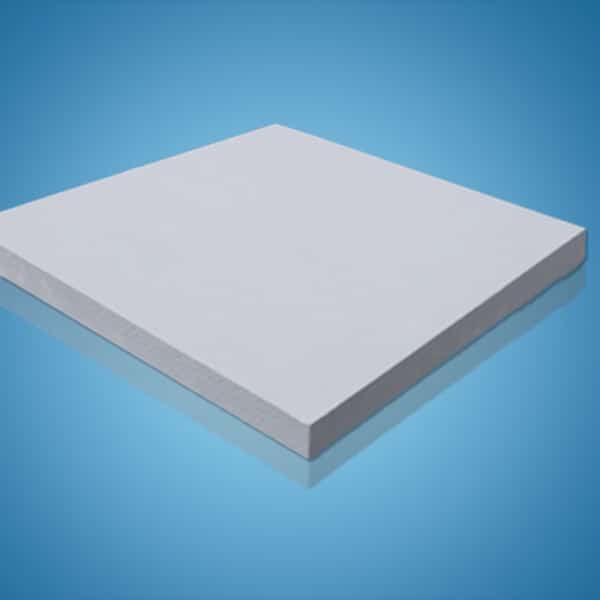
Standard Nano Microporous Insulation Board
Product Description:
Anchor-Microporous nano insulation board, a microporous insulation material, is a high-performance thermal insulation product based on nanometer microporous principles. It is primarily composed of nanometer-scale SiO₂, ZrSiO₄ and SiC particles, reinforced with high-silica fiber, forming a microporous structure through a specialized process. This structure provides excellent high-temperature insulation, with thermal conductivity as low as that of still air.
The product range includes rigid boards, flexible sheets, and custom-shaped components, supporting tailored cutting, drilling, and complex curved surface fitting. It remains stable within a wide temperature range of -200°C to 1100°C, with thermal conductivity only 1/3 to 1/10 of conventional materials.
This lightweight and easy-to-process material can be customized into various shapes, making it suitable for high-temperature equipment in steel metallurgy, petrochemicals, glass production, and other energy-intensive industries, such as ladles, hot air ducts, and kilns. It significantly reduces heat loss and enhances equipment efficiency. The lightweight design minimizes the thickness and weight of the insulation layer, contributing to equipment downsizing and energy optimization while complying with environmental and non-toxic standards, providing a safe and efficient solution for high-temperature applications.
Insulation Mechanism
Anchor-Microporous nanometer microporous insulation material achieves high-efficiency thermal insulation through three mechanisms:
- Suppressing gas heat transfer: With over 90% porosity, the nanometer-scale micropores (pore size < 90nm) are smaller than the mean free path of air molecules, blocking gas molecule collisions and convection, significantly reducing gas conduction heat loss.
- Extending solid heat conduction paths: Ultra-fine particles form a spiral porous structure, increasing the length of heat conduction paths. According to Fourier’s Law, thermal conductivity decreases exponentially as the conduction path length increases.
- Blocking thermal radiation: Light-blocking particles, evenly dispersed and similar in size to infrared wavelengths, refract and scatter high-temperature thermal radiation. Combined with Stefan-Boltzmann’s Law, this significantly suppresses radiative heat transfer at temperatures above 100°C, achieving full-spectrum thermal barrier performance.
Thermal Conductivity Comparison Table (W/m·K)
| Average Temperature (℃) | Insulating Brick | Rock Wool | Ceramic Fiber | Calcium Silicate Board | Still Air | microporous |
|---|---|---|---|---|---|---|
| ‘-100℃ | 0.1180 | 0.0320 | 0.0300 | 0.0380 | 0.0160 | 0.0200 |
| 0℃ | 0.1200 | 0.0330 | 0.0320 | 0.0400 | 0.0180 | 0.0210 |
| 100℃ | 0.1220 | 0.0370 | 0.0360 | 0.0460 | 0.0200 | 0.0220 |
| 200℃ | 0.1250 | 0.0550 | 0.0440 | 0.0550 | 0.0220 | 0.0210 |
| 300℃ | 0.1300 | 0.0800 | 0.0600 | 0.0650 | 0.0250 | 0.0240 |
| 400℃ | 0.1350 | 0.1200 | 0.0800 | 0.0800 | 0.0360 | 0.0240 |
| 500℃ | 0.1440 | 0.1800 | 0.1100 | 0.0960 | 0.0440 | 0.0280 |
| 600℃ | 0.1600 | 0.1800 | 0.1600 | 0.1200 | 0.0600 | 0.0300 |

Anchor-Tech Board Thermal Conductivity (W/m·K)
| Average Temperature | Grade 950 | Grade 1000 | Grade 1100 |
|---|---|---|---|
| 20 ℃ | 0.020 | 0.019 | 0.020 |
| 200 ℃ | 0.022 | 0.021 | 0.022 |
| 400 ℃ | 0.026 | 0.024 | 0.025 |
| 800 ℃ | 0.028 | 0.026 | 0.035 |
Typical Application:
- Aluminium melting furnace
- Aluminum holding furnace
- Glass furnace
- Tempering furnace
- Roller hearth kiln
- Tunnel kiln
- Pit furnace
- Heat treatment furnace
- Cracking furnace
- Lifesaving capsule
- Electric heater
Specifications:
| Product Grade | Grade 950 | Grade 1000 | Grade 1100 |
|---|---|---|---|
| Max. Continuous Service Temperature (℃) | 950 | 1000 | 1100 |
| Density (kg/m³) | 220–280 | ||
| High-Temperature Shrinkage | ~2% (1000 ℃, 12 h) | ~1.5% (900 ℃, 12 h) | ~1.3% (900 ℃, 12 h) |
| Flexural Strength (MPa) | 0.12 | 0.13 | 0.12 |
| Specific Heat Capacity (kJ/(kg·K)) | ~0.9 | ~0.9 | ~0.9 |
| Chemical Composition | SiO₂ 65–80%, ZrSiO₄ 15–30%, high-silica fiber 2–5% | SiO₂ 65–80%, SiC 15–30%, high-silica fiber 2–5% | SiO₂ 65–80%, SiC 15–30%, fumed alumina 10–15%, high-silica fiber 2–5% |
| Fire Rating (DIN ISO 4102) | A1 | A1 | A1 |
| Standard Size (mm) | 1000×600, 1200×600, or customizable; thickness 3–50 mm | ||
Grade data per Anchor-Microporous NMIB Properties datasheet (2023-04-18); density per factory datasheet. Data are average measured results of standard tests which are subject to variation and shall not be used as standard values.
Product advantages:
✅ Ultra-low thermal conductivity for high efficiency and energy savings
- Thermal conductivity is only 1/3 to 1/10 of traditional materials.
- Reduces heat loss by 50%–75%, significantly lowering industrial equipment energy consumption.
- Ladle heat loss can be reduced to 0.3℃/min, and hot blast furnace efficiency increased by over 10%, reducing heat storage and shortening heating time by 20%–50%.
✅ Thin and space-saving, optimizing equipment design
- Provides the same insulation effect at only 1/4 to 1/6 the thickness of conventional materials.
- With a density of 220–280kg/m³, it is lightweight and space-efficient.
- Expands ladle capacity, reduces pipeline outer diameter, and is ideal for narrow spaces.
- When used in torpedo ladle inner walls, capacity increases by 5%, achieving both miniaturization and high efficiency.
✅ Wide temperature stability and high heat resistance
- Operates stably from -200℃ to 1100℃, with a linear shrinkage rate < 2%.
- Maintains structural stability in extreme conditions like RH dehydrogenation units and walking beam furnace water-cooled columns.
- Avoids sharp increases in thermal conductivity under high temperatures, ensuring long-term operational safety.
✅ Environmentally friendly and fiber-free, ensuring safety and health
- Non-fibrous, with no inhalation risks.
- Asbestos-free, certified by international health organizations.
- No dust pollution during installation and use, improving the working environment.
- Meets global low-carbon and environmental protection standards.
✅ Superior mechanical properties for easy processing and installation
- Can be cut, drilled, and bonded, adapting to complex structures.
- Customizable into special-shaped parts and flexible sheets, making it ideal for pipes and curved surfaces (e.g., engine covers and kiln corners).
- Increases installation efficiency by over 30%.
✅ Excellent thermal shock resistance and long service life
- Low specific heat capacity and high porosity, resistant to sudden temperature changes.
- In ladles, tundishes, and other frequently started and stopped equipment, it effectively resists thermal shock damage.
- Extends service life by 20%–30% compared to traditional materials.
✅ Precise temperature control to improve product quality
- Minimizes temperature fluctuations, ensuring uniform heat transfer.
- Reduces temperature gradients in molten steel and glass, improving casting quality and yield.
- In tundishes, after application, molten steel temperature fluctuations remain within ±5℃, significantly improving continuous casting quality.
✅ Recyclable and cost-effective
- Reusable material with long-term cost benefits.
- Although the initial investment is 10%–15% higher than traditional materials, it reduces overall costs by 30% within three years through energy savings and extended equipment lifespan.
- Supports sustainable industrial development.
✅ Superior water resistance
- Optional hydrophobic version effectively resists moisture penetration, extending material lifespan in humid environments.
Frequently Asked Questions about Standard Nano Microporous Insulation Board
Quick answers to common technical and commercial questions engineers and procurement teams ask about our Standard Nano Microporous Insulation Board. For specifications not covered here, please contact our technical team.
For sample requests, lead times, and shipping terms, see the Products page FAQ.
Technical Specifications
| Parameter | Value |
|---|---|
| Maximum Service Temperature | 1000 °C |
| Thermal Conductivity | 0.020 W/(m·K) at 25 °C |
| Standard Width | 1000 / 1200 (custom available) |
| Standard Thickness | 10 / 15 / 20 / 25 / 30 / 40 / 50 |
| Density | 220–280 kg/m³ |
| Compressive Strength @10% deformation | ≥ 0.35 MPa |
| Dimensional Tolerance | ±2 mm (length), ±1 mm (thickness) |
| Minimum Order Quantity (MOQ) | 5 m³ or 100 pieces |
| Lead Time | 10–25 working days depending on configuration |
| Packaging | Standard export wooden crate or pallet; vacuum-sealed PE film interior |
| Quality Standard | YB/T 4130-2005, EN 13501-1 (fire classification A1) |
Why Engineers Choose Standard Microporous Insulation
Our standard nano microporous insulation board is the workhorse of any high temperature insulation board specification — a fumed silica microporous panel engineered for sustained 1000 °C service in industrial furnaces, kilns, and boiler backup.
The fumed silica microporous matrix inside the board delivers a thermal conductivity of 0.020 W/(m·K) at 25 °C — among the lowest of any rigid microporous insulation panel available to industrial buyers.
When specifying microporous thermal insulation for new construction, our standard board gives procurement the widest possible size, thickness, and facing combination at the shortest lead time of the family.
Related Products
Engineers who specified this Standard Nano Microporous Insulation Board also reviewed:
- Arc-Shaped Nano Microporous Insulation
Pre-formed arc panels for cylindrical surfaces — fastest installation on pipework
- Nano Microporous Insulation for Steel Ladles
Ladle backup insulation — reduces ladle heat loss 30–50 %
- Flexible Nano Microporous Insulation Sheet
Roll-form sheet for elbows, valves, and tank heads where a rigid board will not fit
Browse our full nano microporous insulation product line, or read our technical guide on microporous thermal insulation principles. Need help selecting the right board? Contact our engineering team.
Quality & Certifications
Every batch of our nano microporous insulation is produced under a documented quality system and released with traceability paperwork. Third-party test reports and certificates are available on request for engineering submittals and tender packages.
- ISO 9001:2015 — Quality Management System certification for design, production, and after-sales service.
- REACH Compliance — Registration, Evaluation, Authorisation and Restriction of Chemicals — full declaration on file.
- RoHS 2.0 Compliance — Restriction of Hazardous Substances — third-party tested for heavy metals and phthalates.
- Asbestos-Free Declaration — Certified asbestos-free per WHO and OSHA material safety data sheets.
- YB/T 4130-2005 — Chinese metallurgical industry standard for microporous insulation boards.
- EN 13501-1 Fire Classification A1 — Non-combustible per European reaction-to-fire test.
- SGS Test Reports — Density, compressive strength, thermal conductivity, and loss-on-ignition — third-party verified.
- CE Marking — EU Declaration of Conformity for the relevant product families.
Certificate Gallery (Documentation on Request)
High-resolution scans of certificates and test reports are available — request our documentation pack to receive PDF originals.
Related Applications
See how this product performs in real installations:
 English
 German
 Chinese (China)
 Korean
 Japanese
 Spanish
 French
 Italian
 Turkish
 Vietnamese
 Portuguese
 Hindi
 Arabic
 Polish
 Chinese (Taiwan)