
Guangzhou, Guangdong , China.

Nano microporous insulation boards for high-temperature industrial applications

Vacuum Insulation Panel (VIP)
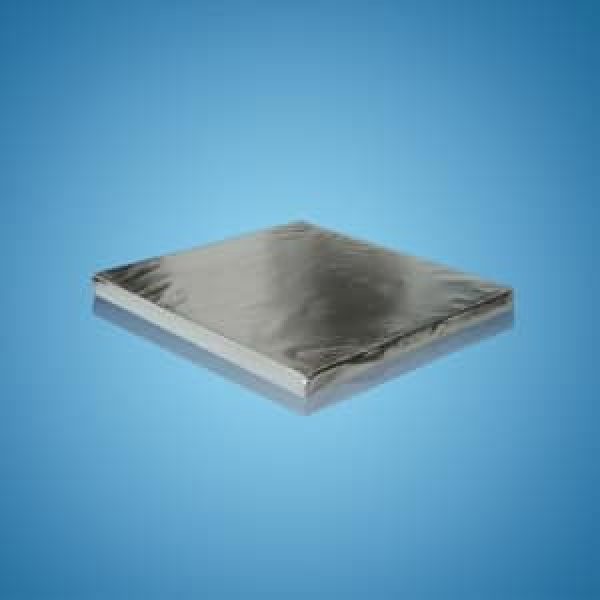
Vacuum insulation panel with nano microporous core

Product Description:

Vacuum Insulation Panel (VIP) is a high-efficiency panel built on a fumed-silica microporous core sealed inside a multi-layer barrier film under vacuum. The material has a very low thermal conductivity (typical value: 0.004 W/(m·K)), strong cold-insulation performance, and a long service life – typically 25 years in cold-chain and building service, extending to 50 years in protected interior installations. The board surface and board edge are flat, which can reduce the heat leakage at the edge as much as possible. It is easy to install and transport, and has excellent long-term thermal stability and resistance to ageing. Even when the vacuum is lost, this material still has excellent thermal insulation performance, and has a very low expansion rate. The fumed silica core board uses environmentally friendly materials, which can be recycled and reused, ensuring safety and environmental protection.

Product specification

core material

Vapor-phase silica microporous insulation board

measure

Length and width: maximum 950x1100mm, thickness: 5-50mm, customized as required.

Application temperature

-70°C – +90°C

density

170-240 kg/m (other densities can be customized)

Thermal conductivity

≤4.0 mW/(m.K)@10℃ initial value

VIP internal pressure

≤5mbar

compressive strength

120 kpa (10% deformation)

service life

Typically 25 years in cold-chain and building service; up to 50 years in protected interior installations.

Technical Specifications

ParameterValue
Maximum Service Temperature80 °C
Thermal Conductivity0.004 W/(m·K) at 25 °C center-of-panel
Standard Width200-1200 × 200-800
Standard Thickness10 / 15 / 20 / 25 / 30 / 40 / 50
Density220–280 kg/m³
Compressive Strength @10% deformation≥ 0.35 MPa
Dimensional Tolerance±2 mm (length), ±1 mm (thickness)
Minimum Order Quantity (MOQ)5 m³ or 100 pieces
Lead Time10–25 working days depending on configuration
PackagingStandard export wooden crate or pallet; vacuum-sealed PE film interior
Quality StandardYB/T 4130-2005, EN 13501-1 (fire classification A1)

Product advantages:

  • The vacuum insulation panel (VIP) uses self-produced high-performance microporous core material, which has advantages such as good insulation performance, long service life, energy conservation and efficiency, and effective reduction of carbon emissions
  • Very low thermal conductivity, which can be as low as 1/10 of traditional insulation materials.
  • Long service life – typically 25 years, up to 50 years in protected interior installations.
  • Even without vacuum, it has excellent insulation performance, superior to most other materials.
  • Cold chain transportation and storage time are longer, ensuring the performance of the goods.
  • Lightweight, can achieve compact structural design and reduce transportation costs.
  • The expansion rate is very low during vacuum loss, and it is stable and long-lasting to use.
  • Excellent compressive performance, not easily deformed.
  • Can provide customized formulas, sizes, and processing shapes.
  • No harmful inhalable fibers, safe and environmentally friendly.

Typical Application :

  • Temperature controlled packaging – biomedical cold box, various Cooler
  • Zero energy building or passive low energy building
  • Heating or heat storage equipment (water heaters, boilers, and heat storage tanks)
  • Household appliances (refrigerators, refrigerated storage cabinets)
  • Refrigerated trucks, cold chain containers, etc

Frequently Asked Questions about Vacuum Insulation Panel (VIP)

Quick answers to common technical and commercial questions engineers and procurement teams ask about our Vacuum Insulation Panel (VIP). For specifications not covered here, please contact our technical team.

Yes. Just share a few basics about your project – where the material will be used, the operating temperature, and the target thickness and size – and we will recommend the most suitable grade and specification for you to evaluate. The information is used purely for material selection. We treat every enquiry as confidential and never disclose your project details to any third party.
Unfortunately not. Preparing each sample set takes dedicated effort from our team – cutting, packing, labelling and export documentation – and without knowing where the material will be applied we cannot judge whether our product actually suits your project. We fully respect your confidentiality requirements; even a general description of the application and its temperature range is enough for us to help you select the right material.
Samples are free of charge. The standard sample set is two A4-size pieces of board, which is enough to evaluate handling, machinability and thermal behaviour. If you need larger pieces or a greater quantity for a trial lining, please explain the purpose and we will gladly support you. If you have never worked with microporous insulation before, we suggest starting with the standard set first: please confirm the material is likely to fit your project before requesting additional pieces, because every set we prepare takes real time and effort from our technicians.
Freight is borne by the customer. Please provide your FedEx (or DHL/UPS) courier account number together with the full consignee details – contact name, company name, street address, postcode, telephone number and email – and we will arrange shipment on your account. If your company does not hold a courier account, tell us and we will quote the freight charge and arrange prepaid shipment for you.
If the requested size is in stock, preparation normally takes 3 to 7 working days. If it is out of stock and the boards have to be produced to order, please allow 1 to 2 weeks. In both cases we work to the shortest possible lead time and notify you as soon as the shipment leaves our factory.
Vacuum insulation panels from our product line carry a service life rating of 25 to 50 years depending on the application environment. The VIP consists of a microporous core sealed inside a high-barrier film envelope under vacuum. The vacuum is the primary insulator; as long as it holds, the panel delivers the rated thermal performance. Aging mechanisms that reduce service life are gradual: the barrier film slowly permeates atmospheric gases (mainly water vapor and carbon dioxide) over decades, and the interior pressure rises from initial 0.05 millibar toward 1 millibar over 30 years in normal interior applications. We rate panels for a 25-year service life in cold-chain and building applications with confidence, and 50 years in protected interior installations. For outdoor, marine, and high-temperature applications the service life is shorter due to accelerated barrier aging; we recommend periodic inspection rather than a fixed service interval.
A typical VIP delivers an R-value of 5 to 8 per inch at the center of the panel, meaning the center thermal resistance is 5 to 8 square feet times degree Fahrenheit times hour per British thermal unit per inch. By comparison, polyurethane foam delivers R-6 to R-7 per inch, mineral wool delivers R-3 to R-4 per inch, and expanded polystyrene delivers R-4 to R-5 per inch. At center of panel, VIP is comparable to polyurethane foam. The edge of every VIP panel has a lower R-value due to the thermal bridge across the panel edge seal, which reduces the assembly effective R-value by 15 to 30 percent depending on panel size and layout. For whole-assembly calculations we recommend using the area-weighted average, which for a typical 600 millimeter by 600 millimeter panel with a 10 millimeter edge thermal bridge is approximately R-20 per inch. VIPs offer the thinnest possible high-performance insulation in space-critical applications.
No, VIP panels cannot be cut, drilled, or punctured on site without destroying the vacuum and rendering the panel ineffective. The vacuum envelope must remain sealed for the panel to deliver its rated performance. Penetrations, edges, and shape modifications must be specified at the time of order and produced in the factory. Common special configurations include pre-drilled mounting points, pre-cut cable penetrations, factory-applied adhesive backing for mounting, and tapered edges for low-profile installations. For projects requiring on-site adaptability, we strongly recommend ordering VIP panels slightly oversized to allow site trimming of the surrounding conventional insulation rather than the VIP itself. If a panel is damaged during installation or in service, it must be replaced because the vacuum cannot be restored in the field.
Vacuum insulation panels are best suited to applications where space is severely constrained and insulation performance is critical. The most common applications are cold-chain logistics (pharmaceutical cold boxes, vaccine carriers, frozen food transport), medical and laboratory cold storage (especially ultra-low temperature freezers), building applications where insulation thickness must be minimized (interior insulation of existing walls, balcony and terrace insulation where headroom is limited), and specialty industrial applications (cryogenic equipment, LNG tanks, aerospace and satellite thermal management). VIPs are generally not cost-effective for conventional building insulation where polyurethane or mineral wool is acceptable, because the panel cost premium significantly exceeds the space-saving benefit. We recommend VIPs where space saving has independent value, such as additional usable floor area in a building or extra cargo volume in a refrigerated container.
A damaged VIP panel, which usually means a punctured or torn barrier film envelope, has lost its vacuum and now performs like a panel of microporous core material without vacuum benefit. The panel is not dangerous; the core is an inorganic composite that does not release toxic gases or debris. The damaged panel should be removed from service and replaced with a new panel. In cold-chain applications the loss of vacuum typically causes a gradual rise in cold-side temperature over hours rather than minutes, which gives time to identify the failed panel and plan replacement. In critical applications we recommend installing VIP panels with a low-cost monitoring film or barcode-tag inventory so each panel can be uniquely identified during inspection. Please contact our technical team if a panel is damaged in service; we can usually supply a replacement within 2 to 3 weeks for standard sizes.
Our standard VIP range covers panel sizes from 200 millimeters by 200 millimeters up to 1200 millimeters by 800 millimeters, with thicknesses from 10 millimeters to 50 millimeters. Sizes outside this range (such as extra-large panels for cold storage walls or extra-thin panels under 10 millimeters for thin-profile applications) can be supplied against special order with extended lead time. The size limit is mainly driven by the barrier film production capability and the vacuum sealing equipment, both of which we can extend for project requirements. For large-area installations we recommend an array of standard-size panels with staggered joints rather than a single oversized panel, because the staggered-joint arrangement is more forgiving of thermal bridging and provides redundancy if a single panel is damaged. Send us your project dimensions and we will recommend the optimal panel configuration.

Why Engineers Choose Vacuum Insulation Panel (VIP) Microporous Insulation

Our vacuum insulation panel (VIP) is the highest-performance microporous thermal insulation in the Anchor-Microporous range: a fumed silica microporous core sealed inside a high-barrier film envelope under vacuum.

Center-of-panel thermal conductivity reaches 0.004 W/(m·K) — about five times lower than our rigid microporous insulation panel at atmospheric pressure, delivering 5–8 R-value per inch.

Where a non-vacuum high temperature insulation panel cannot meet cold-chain, pharmaceutical, cryogenic, or aerospace specifications, the VIP format pushes the same proven fumed silica chemistry into a vacuum-sealed envelope engineered for 25-year service.

Quality & Certifications

Every batch of our nano microporous insulation is produced under a documented quality system and released with traceability paperwork. Third-party test reports and certificates are available on request for engineering submittals and tender packages.

  • ISO 9001:2015 — Quality Management System certification for design, production, and after-sales service.
  • REACH Compliance — Registration, Evaluation, Authorisation and Restriction of Chemicals — full declaration on file.
  • RoHS 2.0 Compliance — Restriction of Hazardous Substances — third-party tested for heavy metals and phthalates.
  • Asbestos-Free Declaration — Certified asbestos-free per WHO and OSHA material safety data sheets.
  • YB/T 4130-2005 — Chinese metallurgical industry standard for microporous insulation boards.
  • EN 13501-1 Fire Classification A1 — Non-combustible per European reaction-to-fire test.
  • SGS Test Reports — Density, compressive strength, thermal conductivity, and loss-on-ignition — third-party verified.
  • CE Marking — EU Declaration of Conformity for the relevant product families.

Certificate Gallery (Documentation on Request)

High-resolution scans of certificates and test reports are available — request our documentation pack to receive PDF originals.

ISO 9001:2015
REACH Compliance
RoHS 2.0 Complianc
Asbestos-Free Decl
YB/T 4130-2005
EN 13501-1 Fire Cl

Request Documentation

Related Applications