
















Our Products
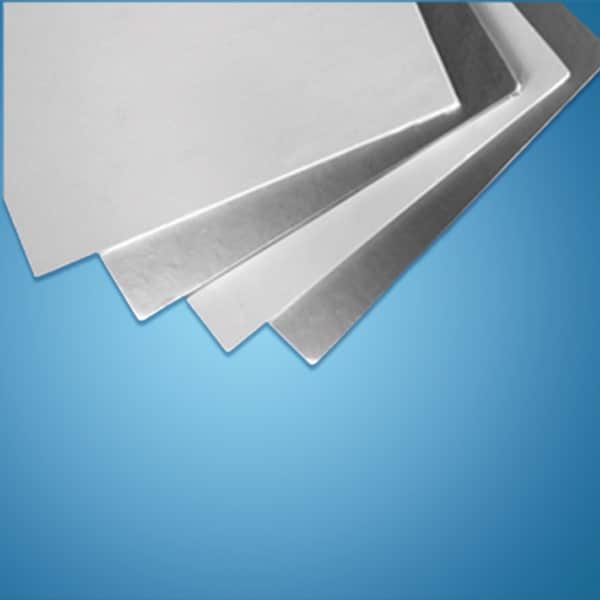
Nano microporous insulation board is a board-like inorganic insulation material with very low thermal conductivity and good processing characteristics, especially suitable for applications with high requirements for energy conservation and environmental protection, especially in high-temperature applications where the thickness or weight of the insulation material is limited. This material has advanced technology, high economic benefits, excellent flame retardancy, and meets the industry standard of “A level” fire resistance rating.
Available in various sizes and specifications: length and width can be freely selected within a certain range, with a thickness of 1 to 50 millimeters, and multiple models are available for selection
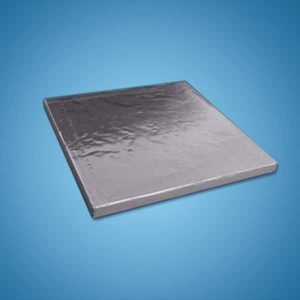
Rich external packaging forms: Customers can choose nano microporous insulation boards without packaging, or choose different packaging materials according to actual application needs. By selecting wrapping materials, the strength of the nanoboard can be enhanced, dust during installation can be reduced, and certain waterproof functions can be achieved. Optional wrapping methods: PE shrink film, aluminum foil wrapping, aluminum foil bonding, fiberglass cloth wrapping, composite with mica sheets, etc.
Mold customization: Customizing molds enables customers to accurately obtain the required product dimensions, thereby minimizing cutting waste. For large orders, customized molds have significant economic benefits for customers.
Typical application scenarios of nano microporous insulation boards include roller kilns, tunnel kilns, lithium electric kilns, aluminum electrolysis tanks, aluminum melting and insulation furnaces, glass kilns, incinerators, well furnaces, heat treatment furnaces, cracking furnaces, lifeboats, electric furnaces, etc.
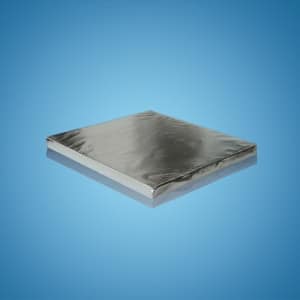
Vacuum Insulation Panel (VIP)
Vacuum Insulation Panel (VIP) is a highly efficient insulation material that combines microporous technology and vacuum technology by vacuum encapsulating the microporous insulation core material mainly made of fumed silica into a high resistance diaphragm bag. The material has a very low thermal conductivity (typical value: 0.004 W/m K), good cold insulation effect, long service life, and usually can reach over 50 years. The board surface and board edge are flat, which can reduce the heat leakage at the edge as much as possible. It is easy to install and transport, and has excellent anti-aging function. Even when the vacuum is lost, this material still has excellent thermal insulation performance, and has a very low expansion rate. The gas-phase silica core board uses environmentally friendly materials, which can be recycled and reused, ensuring safety and environmental protection.
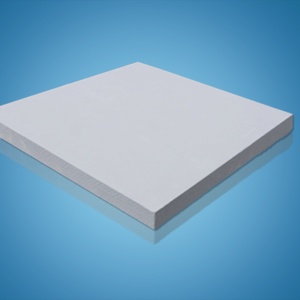
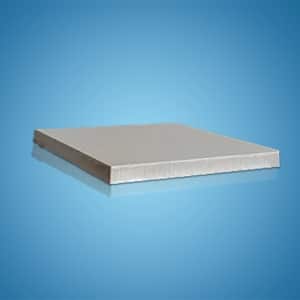
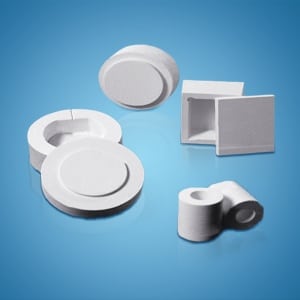
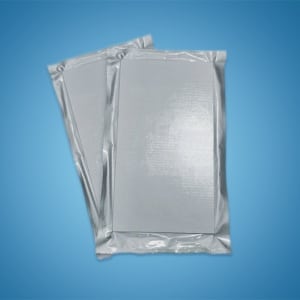
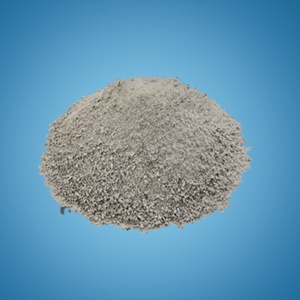
Guangzhou Anchor Technology manufactures a complete range of nano microporous insulation products for high-temperature industrial applications up to 950 °C. Our portfolio covers rigid boards, laminated boards with multiple facing options (PE film, aluminum foil, glass fiber fabric), flexible sheets, arc-shaped and custom-formed parts, vacuum insulation panels (VIP), steel ladle insulation boards, and microporous powder. Each product is engineered around our microporous fumed-silica core with thermal conductivity as low as 0.020 W/(m·K) at 25 °C. Use the sections below to compare product families and select the right grade for your thermal management requirement.
Rigid Boards
High-r rigid microporous insulation boards with thermal conductivity from 0.020 to 0.030 W/(m·K) across 25-600 °C. Available with standard dimensions or custom sizes. Recommended for furnace backup, boiler insulation, and high-temperature duct and pipe insulation where compressive strength and dimensional stability are required.
Standard Nano Microporous Insulation Board
Highest-temperature microporous board for furnace and boiler service. Continuous use to 950 °C, peak exposure 1100 °C.
Laminated Boards (PE / Aluminum Foil / Glass Fiber Facing)
Microporous boards laminated with a facing layer for moisture protection, vapor sealing, mechanical reinforcement, or aesthetic finish. Select a facing based on service environment (humidity, vibration, food contact, outdoor exposure).
PE-Faced Microporous Insulation Board
Standard microporous board laminated with PE film for moisture resistance and cleanability. Common in food and beverage facilities.
Aluminum Foil-Faced Microporous Insulation Board
Microporous board with 0.05 mm aluminum foil facing for vapor sealing and reduced cold-face temperature through low emissivity. Marine-grade and HVAC ready.
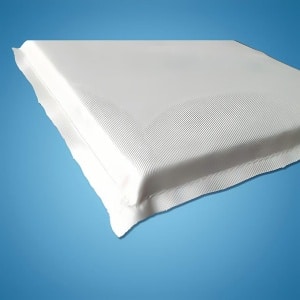
Glass Fiber Fabric-Faced Microporous Insulation Board
Microporous board with woven glass fiber fabric facing for mechanical robustness and cleanability. Suited to vibrating pipework and petrochemical service.
Flexible & Shaped Insulation
Flexible sheets, arc-shaped preformed panels, and custom-formed 3D parts for curved surfaces, elbows, valves, and equipment enclosures. Engineered where rigid boards cannot be installed without on-site cutting.
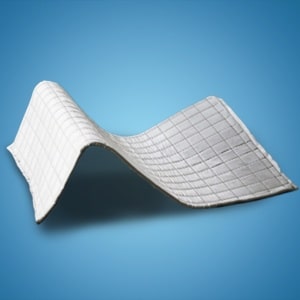
Flexible Nano Microporous Insulation Sheet
Roll-form microporous insulation that wraps around curved geometries and irregular equipment. Common on pipe elbows, valve bodies, and tank heads.
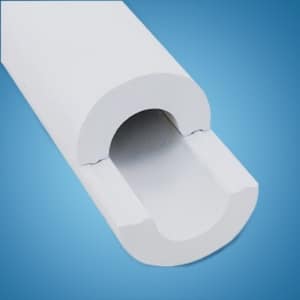
Arc-Shaped Nano Microporous Insulation
Pre-formed arc segments for pipe insulation from DN 50 to DN 1200. Faster installation and tighter tolerances than cutting flat boards on site.
Custom-Shaped Nano Microporous Insulation
Factory-formed 3D parts produced from your drawing or sample. Suitable for pump housings, turbine casings, and complex equipment enclosures.
Application-Specific Insulation
Application-engineered insulation products for steel mill ladles, vacuum insulation panels for cold-chain and cryogenic service, and granular microporous powder for gap filling and on-site application.
Nano Microporous Insulation for Steel Ladles
Steel ladle backup insulation behind the working refractory. Reduces ladle heat loss by 30-50% and shell temperature by up to 60%.
Nano Microporous Insulation Powder
Granular microporous powder for filling gaps, irregular cavities, expansion joints, and on-site application in legacy equipment.
Vacuum Insulation Panel (VIP)
Vacuum-sealed microporous core delivering the highest R-value per inch for cold-chain, pharmaceutical, and cryogenic applications.
Why engineering buyers trust Products List
Anchor-tech track record
Each product family on this page exists because a specific industry or installation requirement generated enough demand to justify a dedicated production run. Rigid board was the original Anchor-tech product from 2014 and remains the highest-volume SKU. PE-faced board was added in 2016 for a clean-room food-processing customer that needed washable insulation behind process ovens. Aluminium-foil-faced board followed in 2017 for marine HVAC insulation. Glass-fibre fabric-faced board was added in 2018 for petrochemical customers whose vibrating equipment was destroying the aluminium skin. Pre-formed arcs entered production in 2019. Custom-formed 3D parts, powder grade, and VIP followed as customer requirements dictated. The matrix on this page is therefore not a generic product catalogue — it is the output of ten years of customer requirements aggregated into a manageable set of standard configurations.
Anchor-tech track record
All products on this page are pressed at our Guangzhou facility from the same fumed-silica master batch — the chemistry is consistent across standard board, laminated grades, pre-formed arcs, custom 3D parts, and powder grade. This is the operational advantage of working with the original equipment manufacturer: a steel mill that orders standard board for one project and formed ladle backup panels for another project receives material with the same lot-traceability chain and the same thermal-conductivity verification. Each product is shipped with a mill-test report keyed to the production batch; if a customer quality team requests verification against the lot, the archived sample is re-tested on the same heat-flow meter that measured the original lot.
Anchor-tech track record
The numbers on this page are realistic, not optimistic. Thermal-conductivity values are quoted as the lot-average from four-temperature-point heat-flow-meter verification (200 / 400 / 600 / 800 °C), not as a marketing single-point estimate. Maximum service temperatures are quoted as continuous-operation values, not as short-term peak values. Standard sizes and thicknesses are quoted as the stocked production matrix, not as theoretical capability — anything outside the matrix is custom and carries additional lead time and cost. Compressive strength is quoted as the value at 10% deformation per ASTM C165 — the same test method our quality-control lab uses for pre-shipment verification. We do not publish performance numbers we cannot verify against our own production lots. Where a customer specification falls outside our published envelope, we say so at the quotation stage rather than promising performance we cannot deliver.
Frequently Asked Questions
Quick technical and commercial answers about Products List for engineering buyers, procurement teams, and installers. For project-specific questions not covered here, contact our application engineering team.